Bead weaving is a rewarding way to create jewelry that feels truly your own. Yet your first projects might not turn out quite as expected. A bracelet may twist, a pattern may drift out of line, or a finished piece may lose its shape.
Usually, the problem isn't a lack of creativity. It's a handful of small mistakes that almost every beginner makes.
Here are five common beginner beading mistakes—and practical ways to avoid them.
1. Choosing beads by color alone
It's tempting to pick the prettiest colors and head straight to your worktable. But bead size, shape and consistency matter just as much.
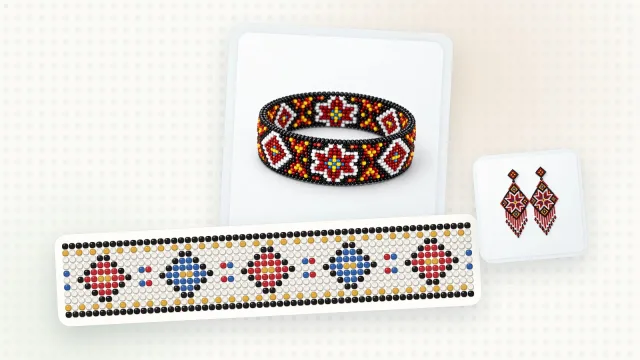
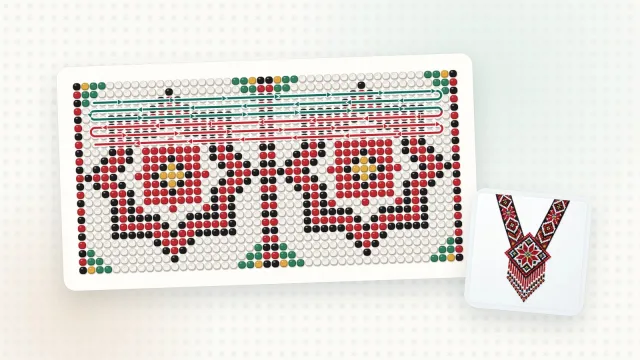
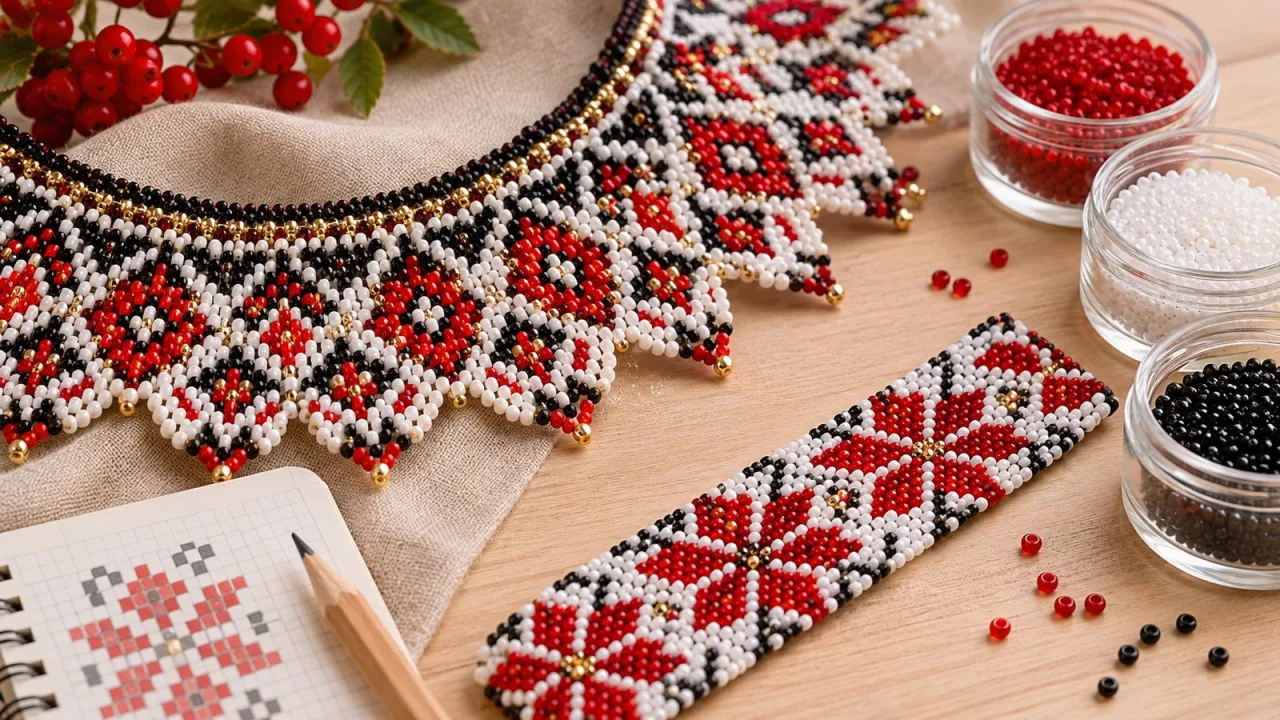
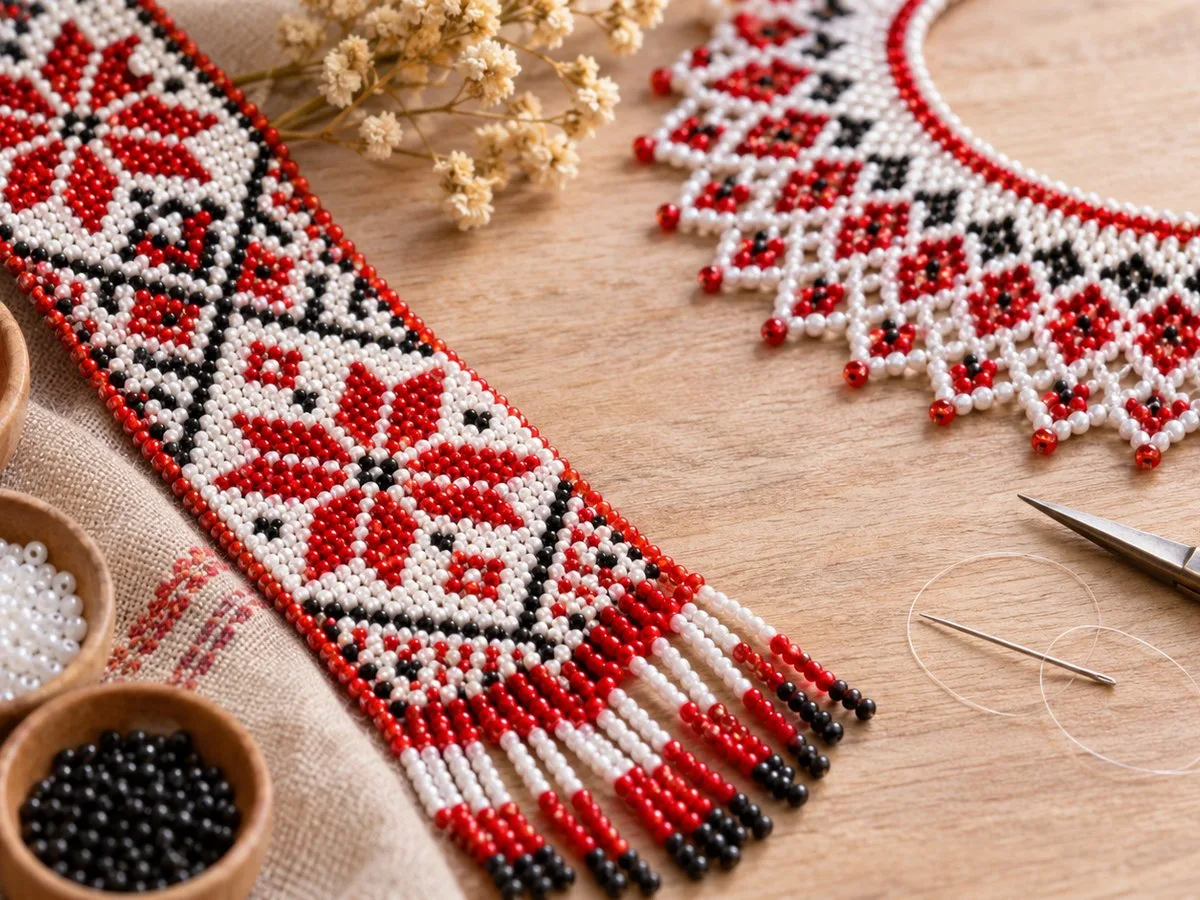
If the beads vary noticeably, rows can look uneven and geometric motifs lose their sharp edges. This is particularly obvious in a gerdan (a traditional Ukrainian beaded necklace), a sylianka (a traditional Ukrainian beaded collar), or a wide woven bracelet.
What to do instead:
Use beads of a consistent size and compatible shape within one project.
Remove misshapen beads before you start.
Check the hole size, especially where your thread needs to pass through a bead more than once.
For crisp geometric designs, consider consistent, well-sized beads from makers such as Preciosa or Miyuki.
Remember that the same size number does not guarantee an identical fit across different brands.
2. Starting with a pattern that's too difficult
It's easy to fall in love with a large gerdan or an intricate sylianka and want to make it immediately. But dozens of color changes and repeated elements can be confusing when you're still learning the technique.
You may end up undoing rows again and again—and enjoying the process a lot less.
What to do instead:
Begin with a narrow bracelet, a simple geometric motif or a short practice swatch. For your first pattern, look for:
Two to four main colors.
A small number of repeating elements.
A clear weaving direction.
Motifs that are easy to distinguish.
Once you feel comfortable following a chart and keeping steady tension, move on to more detailed pieces.
3. Pulling the thread too tight—or leaving it too loose
Thread tension has a huge effect on how finished beadwork sits.
Pull too firmly and the woven piece may pucker, curve or twist. Leave too much slack and gaps can appear between beads, making the jewelry feel less stable.
What to do instead:
Aim for consistent tension throughout the project. After a few rows, lay your work flat and check for distortion. If something looks wrong, fix it early rather than adding more rows on top of the problem.
Resist the urge to correct uneven work by giving the thread one hard tug. That can make things worse.
4. Losing your place in the pattern chart
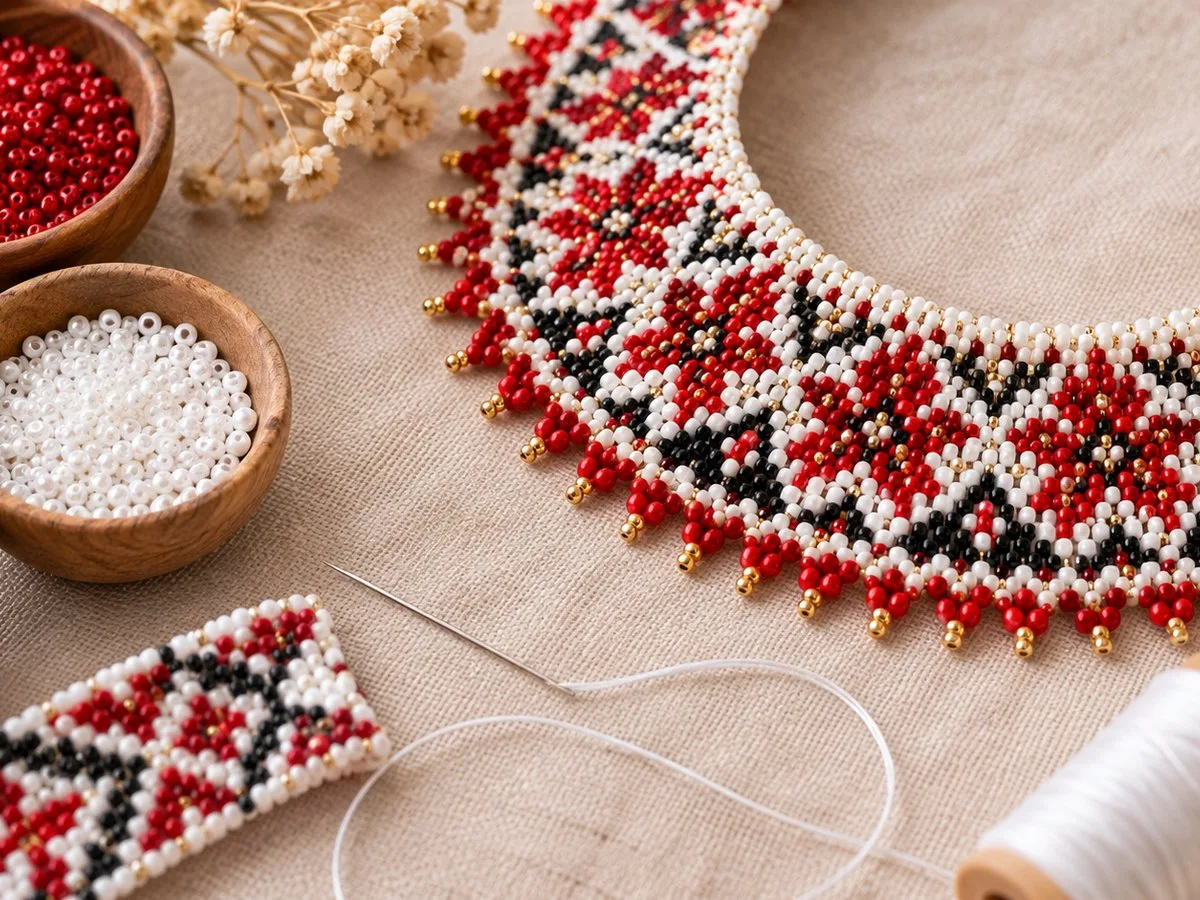
One skipped or misplaced bead can break the symmetry of a geometric design. Discovering the mistake after several dozen rows is especially frustrating.
Beginners sometimes try to memorize a sequence of colors instead of checking the chart as they go. For more complex motifs, that's a risky shortcut.
What to do instead:
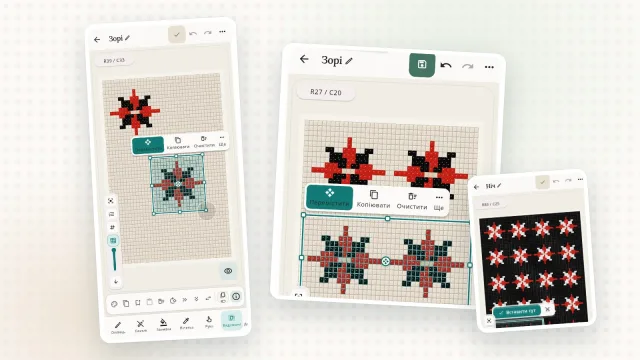
Look over the full chart before starting.
Identify the weaving direction and where motifs repeat.
Mark off completed rows.
Check bead counts and colors regularly.
Review symmetry at the end of each motif.
If you spot a mistake, don't immediately take everything apart. First locate the error and work out exactly how much needs to be redone.
5. Not securing the thread and findings properly
A piece can look lovely and still start coming apart after only a few wears. The culprit may be an unsecured thread end, a clasp that doesn't suit the piece, or a weak connection between components.
Finishing deserves just as much care as the weaving itself.
What to do instead:
Choose thread appropriate to your technique and bead size.
Avoid excessively long lengths of thread that tangle constantly.
Secure thread ends using a method suited to your stitch.
Where possible, weave thread tails back into the beadwork.
Check clasps and connections before wearing or gifting the piece.
Don't rely on a single random knot: a secure finish depends on how the jewelry is constructed.
Progress matters more than perfection
Mistakes are part of learning. Experienced bead artists still undo rows, change colors and remake details when something doesn't look right.
Your first project doesn't need to be perfect. Understanding your technique, reading patterns with confidence and getting a feel for your materials matter far more.
Start small, explore color combinations, and gradually take on more ambitious designs. Biser Studio can help turn those creative ideas into patterns for future jewelry.
What did you struggle with when you first started bead weaving? Share your experience!